
Introduction
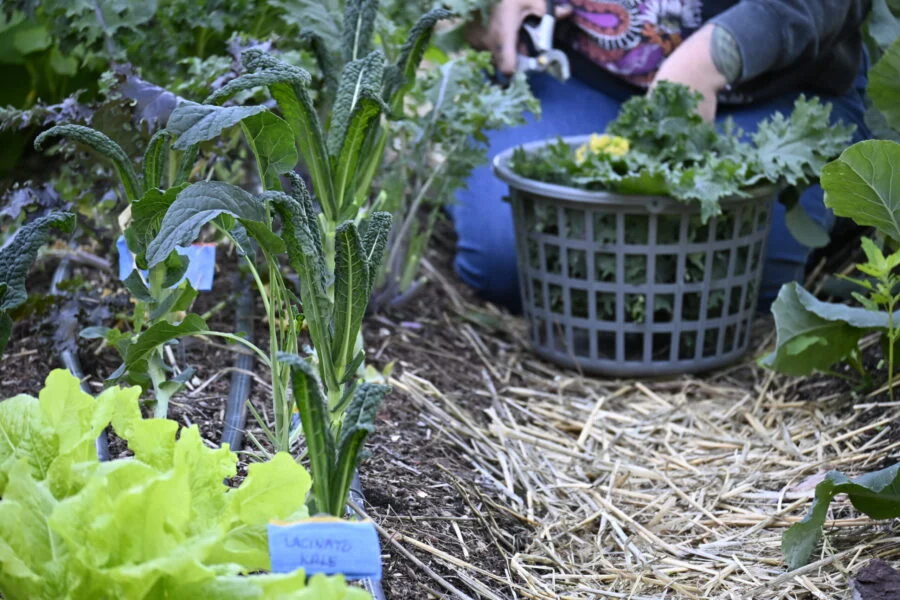
Maybe it is the twinkle in the eye, or lightness of step, or dexterity of limbs, I am not entirely sure, but I can usually spot a gardener in a crowd. They seem livelier and more present than the people around them. The telltale is a hue of health.
In addition to confidence and agility, gardeners enjoy better health than non-gardeners (Soga et al. 2018). Accomplishment and pride, exercise and range of movement, dirt and sunshine are the ideal ingredients for positive health outcomes. And these outcomes can be profound. Rich interactions with land do not guarantee longer life, stronger immunity, and less depression, but the scientific literature has shown that these benefits are more likely when we garden (Feldmar 2018).
Health gains are an unsung bounty of intimate relations with land. I believe the act of gardening is an act of self-care. Gardeners along the West Coast have taken this act a few steps further by creating landscapes that bring a garden’s goodness indoors.
From a landscape designer’s point of view, there are two parts to landscaping for self-care.
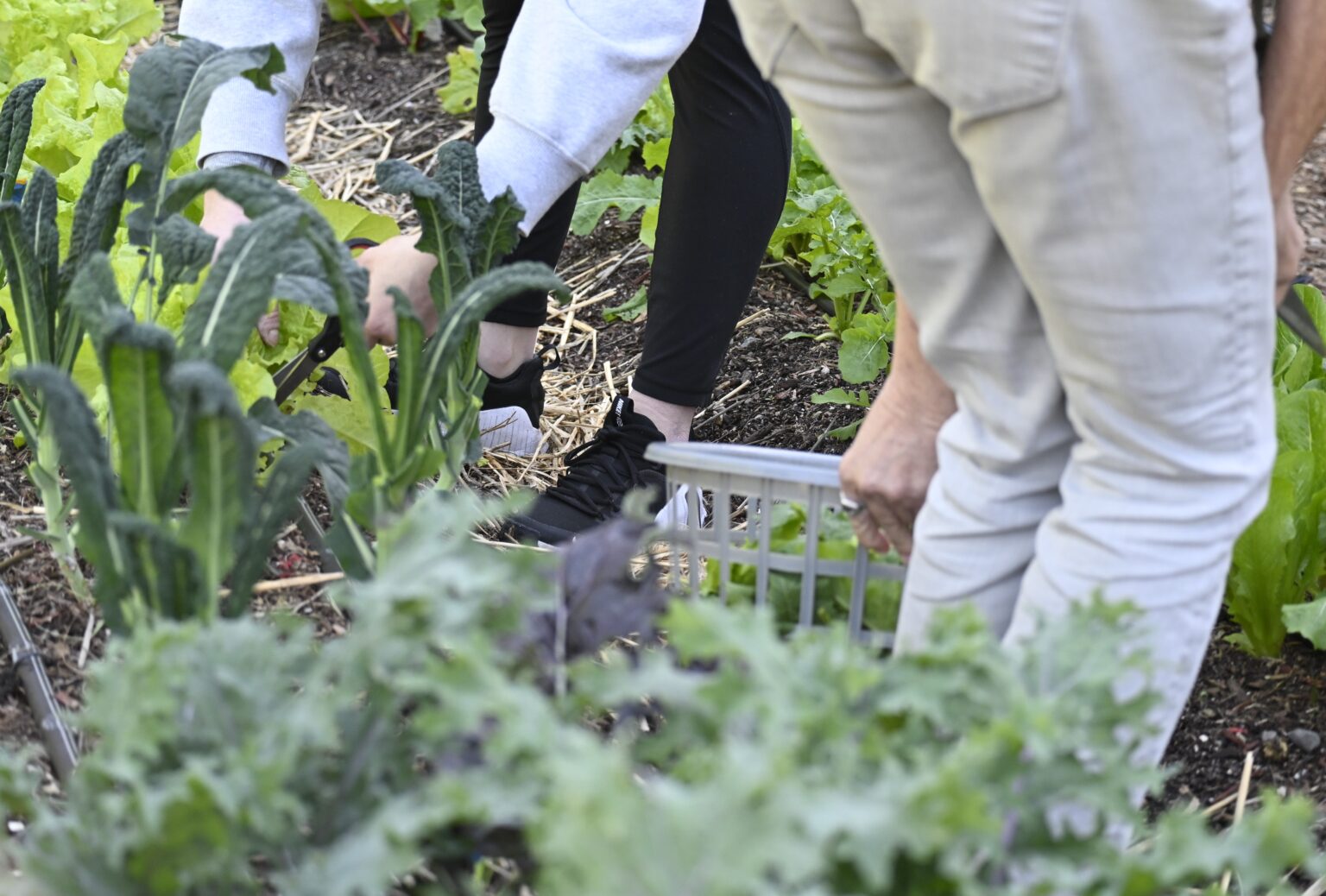
Physical and dirty: Working in a garden on your own or with others is great for personal health. It does not make a difference what a gardener grows as long as it pulls people outside and into positive interactions with the land.
Bring the bounty indoors: There is an abundance of plants that gardeners grow to enliven indoor environments. What better way to cultivate participation and get people dirty than planting plants that can be used indoors to improve health outcomes? By actively honoring plants that honor us, we care for many.
The value of getting physical and dirty
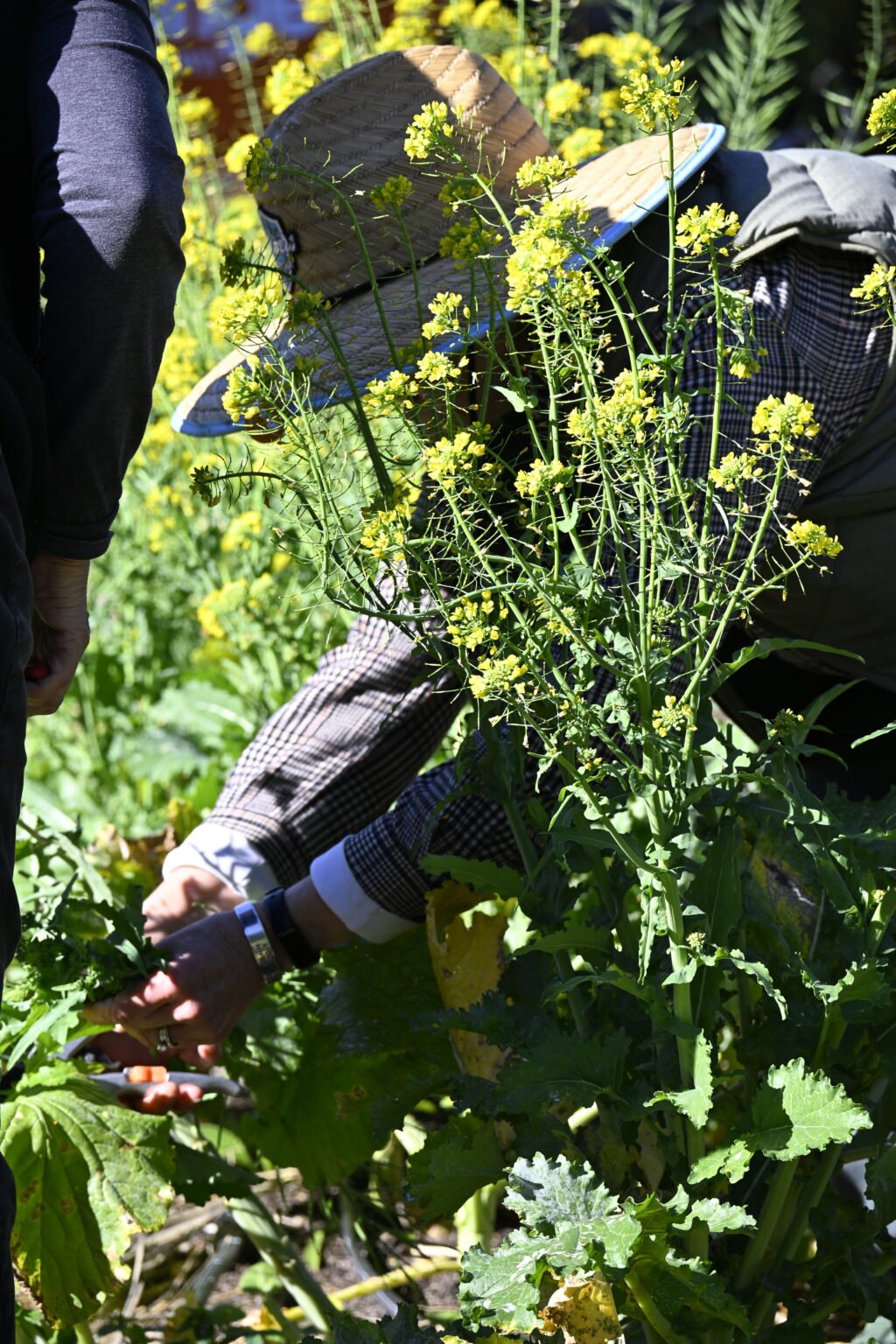
Want a robust smile? Grow root crops and get grubby. Want protection from viruses? Care for your landscape with your labor. Want a long life? Dig into your garden and its many wonders. No other recreational pursuit compares with gardening when it comes to improving personal health.
Immunity: Gardening is a mild exercise that enhances levels of vitamin D and feelings of wellbeing, while reducing blood pressure and levels of stress, all of which improve our immune system (Thompson 2018).
Longevity: The evidence is well-documented and immense. Gardening may extend your life. Mild exercise, getting dirty, and sunshine are fantastic for a longer, healthier life (Feldmar 2018; Li et al. 2020; McCallum et al. 2007).
Mood: There is a bacterium in soil called Mycobacterium vaccae that acts as an antidepressant by increasing norepinephrine and serotonin levels. This bacterium not only makes people feel happier, but has also been shown to improve emotional health, vitality, and general cognitive function (Berman et al. 2012; Glausiusz 2007; Lowry et al. 2007).
“How had I become so focused on the outside world that I failed to create a sanctuary in my own life?” Jessi Bloom asked in her book Creating Sanctuary (2018). She answered that question throughout her book: “Nature will nurture us, if we, in turn, nurture nature.”
Bring the bounty indoors
Of all the many things that can be grown in landscapes that enhance personal health, this article focuses on cut flowers, fragrances, and teas. Some of the other things commonly grown are food, medicines, oils, and soaps. Self-care is personal and gardens will be as unique as individuals tending them.
Cut flowers
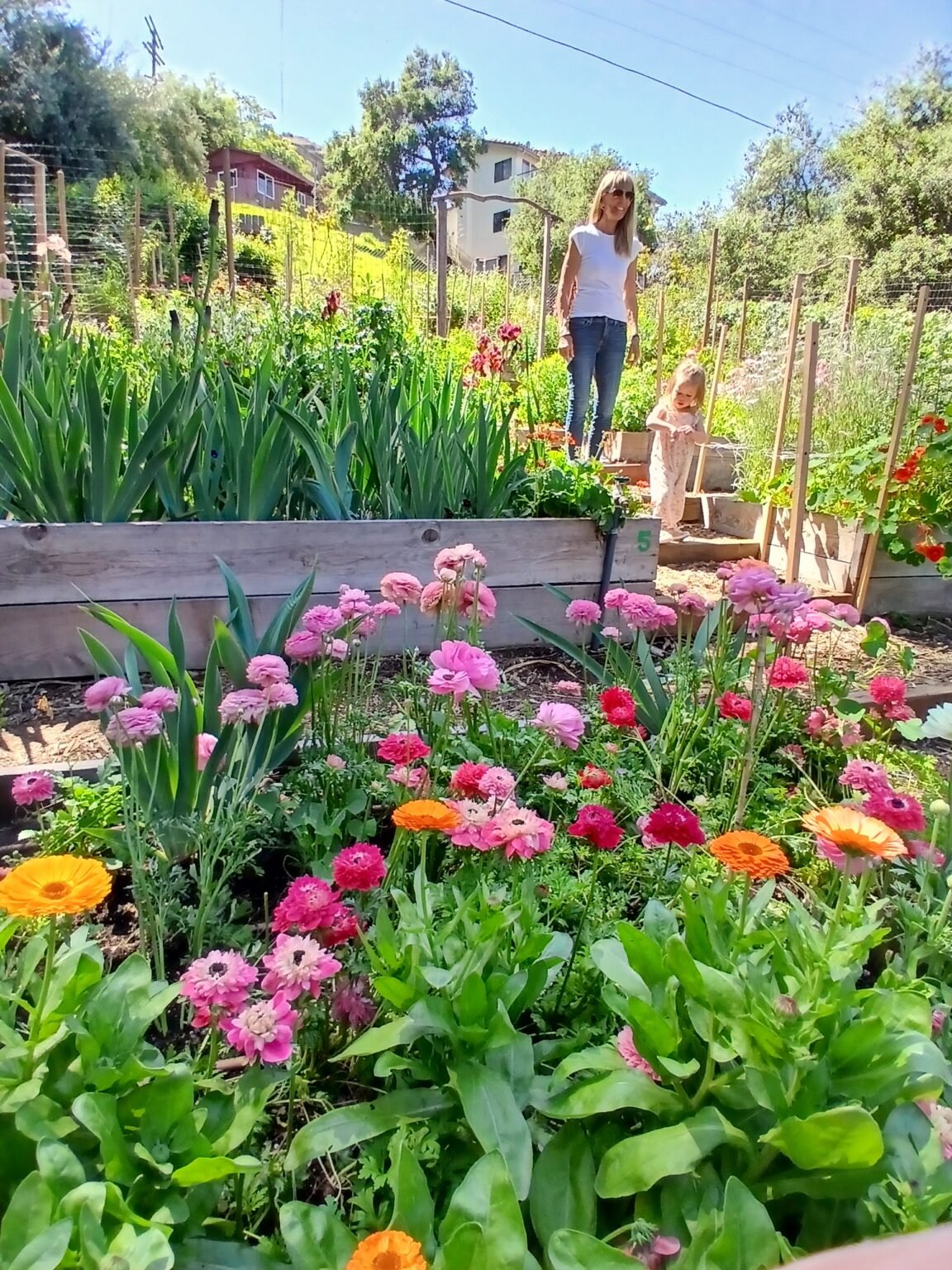
Cut flowers have graced rituals of celebration, grief, and healing for eons. In her book The Light Eaters (2024), Zoe Schlanger elegantly spoke to the power that flowers exert in their immediate environments: “Beauty is almost always a form of communication.” This beauty speaks loudly to humans. The colors and fragrances of indoor flowers reduce stress, lift moods, increase memory, help relationships, and inspire healing (Society of American Florists 2018).
“Cut flowers mentally change the moment. They are beautiful and living,” said Kathleen Ferguson, owner of Frogtown Flora, a landscape firm specializing in cut flowers in Los Angeles. “Give someone a bouquet and they will immediately take it to their face. The benefits of connection are amplified when they get their hands in the soil—there’s almost an immediate shift in mood.”
Cut flower gardens make sense in urban areas. The harvest is often longer-lasting, easier to grow, and does not attract as many vector problems as food plants. They are also beloved by bugs and birds if left unharvested. While there are hundreds of plants that produce cut flowers, I like the ones below because they are atypical, long-lasting, and require few resources to grow.
Six unusual and easy-to-grow plants
Aloe (Aloe spp.): Bringing the color orange inside during winter is one of the biggest benefits of growing aloe for flowers. The flowers are also long-lasting. Plus, this genus is easy to grow, whether in the ground or in a pot.
Amaranth (Amaranthus spp.): While there are many amaranths, and many of those are weedy, the ones used for cut flowers are generally cultivated. The flowers can be stoutly upright or hanging like beaded tassels. A few grown commercially for flowers include dreadlocks amaranth (Amaranthus caudatus ‘Dreadlocks’), globe amaranth (Gomphrena globosa), and love-lies-bleeding (Amaranthus caudatus).
Matilija poppy (Romneya spp.): Drought tolerant, fire resistant, and a favorite among novices and experts alike, Matilija poppy is both a dominant feature in a garden and a vase.
Throatwort (Trachelium caeruleum): This tough Mediterranean perennial provides long-lived stunning globes of flowers for months in summer. Long-stemmed and pastel in nature, the flowers are either blue, mauve, pink, or white.
Toyon (Heteromeles arbutifolia): While the white flowers of toyon can be added to a bouquet, it is the profuse red berries that appear in fall and winter that are most prized. As a rule for myself, if the berries are not eaten by wildlife, I believe that it is okay to use them for human ornamentation.
Yarrow (Achillea spp.): The flowers of yarrow are as handsome fresh as they are dried, which makes these flowers exceptionally long lasting. If growing the West Coast native (Achillea millefolium), you will get good results in neutral or slightly alkaline soil.
Leave a Reply