
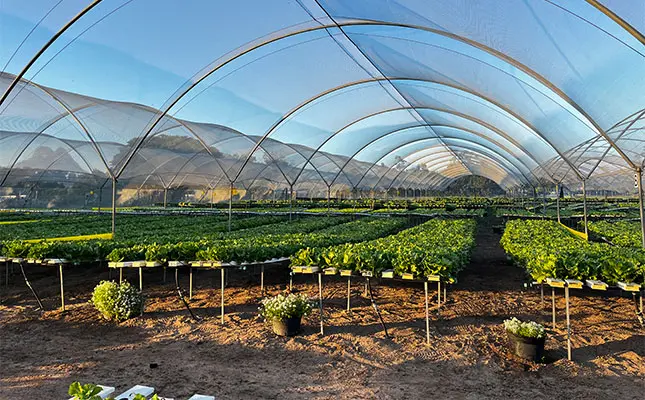
Hydroponic farming is all about finding the sweet spot within the matrix of factors that influence plant growth – temperature, light, water, and nutrition. High-end greenhouses are designed to manipulate all these variables according to the plant’s needs.
Leafy green and vegetable producer Cultura Fresh, however, runs its hydroponic operation outdoors, with only shade netting protecting its crops from the sometimes harsh climate conditions at its two Western Cape sites. Yet they grow between 70 000 (in winter) and 100 000 (in summer) heads of lettuce per week, which are sold in supermarkets and in quick-service food outlets in the Western and Eastern Cape.
ADVERTISEMENT
“Growing produce in a controlled climate is extremely expensive. Erecting tunnels with plastic covering costs multiple millions of rands,” says Kaylee Smit, chief cultivation officer at Cultura Fresh.
“Along with the structure and plastic, you also need fans and a wet wall to control the climate, which adds significantly to both the expense and the running costs, particularly electricity.”
For Cultura Fresh, light was a key reason for sticking to natural sunlight. The largest proportion of their output (60 000 heads per week in summer and 40 000 in winter) is iceberg lettuce, which is extremely difficult to grow in greenhouse conditions.
“Iceberg lettuce loves sunlight, and the moment you bring in plastic sheeting, it becomes very complex to obtain the optimum light spectrum for it to grow well. Not even hi-tech European operations manage; most iceberg lettuce in Europe is imported from Spain, which has a Mediterranean climate like South Africa,” says Smit.
Leave a Reply